and has 0 comments
Star Trek: Strangers from the Sky is an audiobook read by George Takei and Leonard Nimoy. While it is a typical ST The Original Series plot, with god like aliens, travel back in time to significant moments of Earth's history and a focus on high moral values that, in the end, save the day, I felt that it was a little bit more subtle, deeper than a typical episode of any of the series. Was it because of the introspection of the characters, or the wonderful narration of Nimoy and Takei, I do not know. What I can say is that I enjoyed listening to the story quite a lot and I recommend it highly for any Star Trek fan.

I also don't know if it is in the public domain or not, all I can say is that I listened to it on YouTube and so can you:
Of course you cannot listen to it on YouTube anymore. Some lawyers saw to that.

and has 0 comments
This is the third writing of Esther Friesner that I've read, after The Shunned Trailer and Druid's Blood, both excellent and funny, combining fantasy elements with the present or other realistic historical settings. Gnome Man's Land does the same thing, but I have to say I didn't find it as funny or as good as the others I mentioned. I also attempted to start Here Be Demons, another of her books, but couldn't really enjoy it enough to go past the first chapter. Probably she is one of those authors who, when they are good are really good and when they are not, well...

The book is the first of a trilogy starring Tim Desmond, a young boy of Irish descent who finds himself in a strange situation when the veil between our world and the land of the fey is punctured and more and more fantastic creatures go through. They come and attach themselves to mortals, as many of them are creatures who's very reason for existing is serving their masters. Stuff like banshees, Mongolian ancestors, goblins, kobolds, Greek demigodesses, Russian bath spirits, sprites, elves and so on and so on just sprout from the rupture, bringing annoyance and confusion more than anything. Tim somehow gets tricked into becoming the champion of the Fey on Earth and he does the job mainly because he feels all of these supernatural creatures need his help (plus the girl he secretly loves supports this and his banshee is a hot redhead to boot).

Some hilarity ensues, but often feeling a bit artificial, while the actions of the characters involved are simplistic, inconsistent and dragging on, like the author wanted to tell a joke and she ended up writing an entire book. The crises are not that good either, oscillating between childishly funny and dead bloody serious. The ending was disappointing as well, leaving a very traumatic event just in the wind, like an afterthought, pending Tim's recovery of some of his memory. I really wanted to like the book, too, but in the end I just forced myself to reach the end and I am confident I will not read the other two books in the series. I have some hopes for the Princesses series, which I understand is one of Friesner's better works.

and has 0 comments
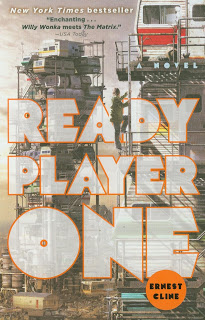
If you were born before the 80s, Ready Player One is going to fill you with melancholy. Ernest Cline combines several classical young adult themes - like a battle versus an oppressive corporate evil, true and pure love, villainy and lack of honor defeated through friendship and good feelings - with (often obscure) geek memes of the 70s and 80s. If you are the kind of person who likes to impress by quoting lines from movies or telling of your adventures in games that are older than your children, this is the book for you. OK, I won't be mean, the book is going to be fun no matter when you were born, but the level of enjoyment may vary.

However, the book is still a young adult book at its core and, besides the overall message that you actually have to make an effort to reach your goals - an often neglected tidbit in young adult books and movies - it reads like one. Young heroes, with enough skill to pass through the challenges of the story, but awkward enough to also be endearing, manage to save the world through the power of their dedication and ideals. Also Chekhov's Gun has been used so much that it left gaping holes in the story. Amazing how random things in the story come perfectly together at the end. Let a bitter Harry Potterish aftertaste.

But let's start with the plot, which is pretty fun. It all happens in a dystopian world where energy reserves dwindled, gasoline became way too scarce and expensive, Elon Musk never happened and most people live their lives in a virtual world called OASIS, created by a brilliant yet reclusive visionary who made sure the system will remain secure and anonymous. Kind of like the Internet, but without the MPAA or the NSA. Yeah, it already sounds like an impossible dream, doesn't it? Well, the maker of the game world dies and leaves his entire estate (hundreds of billions of dollars and complete control over OASIS) to whoever finds the Easter Egg he his inside the game. The heroes of the story are young "egg hunters", while the villains are corporate drones who have been hired to find the egg for their company.

The writing style irked me a little. I know it is Cline's first book, and it certainly was a decent effort, but it had that way of explaining things that I call "fake past" in which the narrator explains things as if he is telling a story from the past. "The OASIS was...". Since this is supposed to happen in the future, it took a while until I could stop feeling irritated by it. However this has the advantage of being very easy to read.

I think it matters a lot if the reader is into cultural references. I could understand some, I could remember some, most of the references in the book, though, were ancient or obscure enough that even I didn't recognize them, and I am a pretty geeky person. I felt rewarded when I could "get it" and frustrated when I didn't, so probably it will be the same for most readers. If you don't care about these things, I think it is better to wait for the movie.

...which is in the works, with Steven Spielberg attached to the project. It might be difficult to put the story on the screen, though, since the book made an effort to describe a future world where everybody is obsessed with this specific period of the late 20th century, kind of like the Star Trek episodes that happened in the past or that required Kirk or Picard to know some specific book from the school curriculum. There is even a Ready Player One web site, that might have some Easter eggs in it (they would be dumb not to program some) but to me it seems both way too geeky and way to social at the same time.

Bottom line: a fun book for geeks. I hope it inspires the younger generations to look at the world a little bit differently, but I don't have my hopes up. My guess is that they will go all 'Meh' on a story that references anything that happened last century.

and has 0 comments
Villains by Necessity is not a masterpiece of literature, but it is a fun fantasy book that doesn't feel the need to be part of a trilogy or take itself too seriously. Perfect for when you want to pick up a book because you are tired, not because you want to work your brain to dust. First work of Eve Forward, it is rather inconsistent, moving from silly to dead serious and back and making the heroes of the story oscillate between pointlessly evil and uncharacteristically good.

The best part of the book, though, is the concept. The world enjoys an age of light and good after a bitter war that saw all the forces of darkness and evil be defeated. The world is filled with happy people, no conflict, beautiful weather, lush vegetation. In a word, it is fucking boring. An unlikely party of evildoers gets together to save the world by bringing darkness back!

Alas, it was a concept that was not really well used. The characters, borrowed from classical fantasy, are "evil" by their professions only, but not by behaviour. Sam is an assassin, but he doesn't enjoy the suffering of his victims and is proud of his prowess. Archie is a mischievous thief, but other than that he is an OK fellow. Even Valerie, the dark sorceress, eats sentient beings just because it is her race's culture and her evil is more often artificial. Not to mention Blackmail, who acts as the classic stoic hero. Similarly, the forces of good are blood thirsty thugs that want to either kill everything dark or brainwash them, as a humane solution. This basically makes our heroes... err... heroes, not villains, and viceversa.

Now, the book wasn't bad. The style was amateurish, but it is Eve Forward's first book, after all. I could read it and I got caught by the story. I was more attracted to the original concept, though, and I was very curious how it would go. It is so difficult to present bad people as the protagonists, I know, because many people, including writers as they write, want them to be redeemed somehow. In the end, the moral of the story - excruciatingly laid out in a few paragraphs that shouldn't have existed - felt really heavy handed and simplistic. Ok, good people can do bad things and bad people can do good things, but it is important to explore what makes them good and bad, not just lazily assign them dark fantasy classes and be done with it.

Bottom line: fun read, but nothing special.

and has 0 comments
This is how reality stands right now: even if the danger of an asteroid hit is great, the risk of one hitting is small. That means that they hit (very) far apart and cause a lot of damage. Now, all governments in the world are run by politicians, who are by their very nature bureaucrats. They are reactive, not proactive, and they have insulated themselves from responsibility by manipulating laws and creating committees and departments that they can behead at any time, as they keep their fat asses on their chairs of power. This is not a rant, it's just the ugly truth, evolving, but never really changing since we were barely smarter than monkeys.

The logical conclusion of these facts is that politicians will not do anything about asteroids until we are hit by one. Even worse, since the probability that a really big one will hit without us knowing in advance has been reduced by space advances, the asteroid that will hit us will probably be small. The Tunguska and the Chelyabinsk events, real things that happened, changed nothing. The one that is going to change anything will be when something similar happens on top of a city.

This is not a doomsday prophecy, either. The probability that this will happen is extremely small. First of all the asteroid has to be small enough and/or fast enough so that we don't detect it in time. Then it has to hit at a certain angle to not be deflected by the atmosphere. Then it has to reach a populated area, which one would think is simple, since we can't seem to be able to fart without someone smelling it, but in truth, with the oceans and the human propensity of congregating for no good reason, it is less probable. However, with enough time, even a small probability becomes certainty.

So, the scenario goes like this: we all pretend to care, but we don't. We want less taxes, not asteroid protection. Politicians use our shortsightedness and our greed to enhance their own and do nothing. Then an asteroid hits, causing massive damage, death and loss of property. This is the moment when something happens. They implement new laws, launch asteroid defense programs, create new departments and committees. But, since the probability that an asteroid hits is small, the hype will fade, the budgets with it, politicians will rotate, people will forget. By the time the next asteroid hits, no one will be prepared for it any more than for the previous one.

In the end, the only things that ever made a dent in the probability that something will hurt us as a species or even as a larger group were technological. Not technology per se, just its price. Just more scientists with cheaper tech getting more done. When space launches become cheaper, satellites smaller, we can do more with them at the same relative price. That is why now we are discovering millions of asteroids in the Solar System, not because of some sort of scientific awakening. It's cheaper, probably as cheap as it was for amateur astronomers to buy telescopes in 1801, when Giuseppe Piazzi discovered the first asteroid, Ceres. I just hope this all gets cheap enough fast enough so we can do something by the time the big asteroid is coming. Well, if we don't destroy ourselves in some other way by then.

I know I'm a month late, but Happy Asteroid Day!

and has 2 comments
There are several stories happening at the same time in The White Luck Warrior, with almost no direct connection between them. There is the Great Ordeal, advancing slowly towards Golgoterath while being besieged by hordes of Sranc, also containing the story of this kid prince forced to march with it; then there is the palace life, with Esmenet left to rule the empire while Kellhus is away, while various factions are ready to take advantage of the lack of man power of the leadership and her half Dunyain children prove to be either insane or really insane; there is the trek of Achamian in search of the origin place of Kellhus. Among these there is a vague and a few paragraphs long subplot of The White Luck Warrior, a mysterious figure that seems to know all of its future, making him an automaton, I guess and some bits about the Fanim.

Why the smallest and insignificant portion of the book gave its title I do not know, but remember that the first book in the Aspect-Emperor series was called The Judging Eye, which is most prominently used or described in this volume. By far the most interesting and captivating storyline is that of Achamian, although I have to say that the logistics of long duration travel within enemy territory and the psychological factors involved seemed to me poorly described by Bakker.

What I knew will happen happened. I finished the book before the third volume in the series was released and now I am in withdrawal pains. That proves that the book captivated me. At very few moments I felt the need to "fast forward" and, considering the amount of distraction and that I had resolved to draw this book out a little bit in the hope that the third volume would be released, I finished it rather quickly.

Even if enjoyable, to me it felt more like a filler. I couldn't empathize with Esmenet or any of her demented children, nor could I care less what happened to Maithanet, who is one of the less fleshed out characters in the book. Similarly, the Sorweel story arch described a confused and frustrated teen, which was relatable, but uninteresting as a character. Unlike in the first four books, Kellhus sounds less godly and dominating and is mostly relegated to a minor role in the overall story. No, the most interesting characters and storyline revolve around Achamian, Mimara, The Captain and the mysterious Cleric, plus any of other members of the crazy bunch of mercenaries known as The Skin Eaters. And they just walk and walk and walk, only to end the book in a cliffhanger. While I await eagerly the sixth book, I have my misgivings and fears that it will not be as good as this one, just as this one felt a little bit short of the first.

and has 0 comments
The Prince of Nothing trilogy was a total masterpiece, full of harrowing experiences of flawed men and women and characters so deep and original that they defied belief. You get the godlike Kellhus, not only freezingly rational and intelligent, but also mastering the Gnosis, the art of magic, while being a textbook example of a charismatic psychopath. You get Akkamian, a worldly sorcerer and spy, a teacher and a hopeless romantic. You get Cnaiür, a monstrous barbarian driven by revenge, but trapped by love. Esmenet, the whore empress mother, being heartbreakingly and treacherously a woman. And all these complex characters get to live in an epic world of different cultures, with politics, and military campaigns and evil creatures serving the No-god, shape shifting assassins and magic schools. In fact, it was so great that I found myself feeling dread of reading more, so terrifying the deep and personal pain of the characters that it was becoming mine.

Now I have finished The Judging Eye, the first book of the Aspect-Emperor trilogy, itself no more than a direct continuation of Prince of Nothing. R. Scott Bakker kind of cheats by using the same basic scaffolding for this story: a military campaign where an innocent and sympathetic character is being eroded by Kellhus' influence, a dark character driven by revenge on a lonely and dangerous quest, against himself slowly warming himself to the presence of a woman, court machinations driven by self serving creatures and the general backdrop of a clash between religions. He does it masterfully, though, switching the characters around and adding new ones to fill the roles left empty. In The Judging Eye one gets something as similar to The Darkness That Comes Before as needed to please the crowds that enjoyed Prince of Nothing, but as different to make it a completely different story. You get more of the same, so to speak, with an emphasis on 'more'. But also a little bit less.

Not everything is perfect. I feel that the inner dialogues of the characters have become more opaque, more strained. The metaphors flow just as in the previous books, but they communicate less, one makes more of an effort to get them and feel what the author meant, giving it a slight air of pompousness. I mean even a little kid philosophizes more than all the adults I know. The book has slightly more action scenes than I remember in Prince of Nothing, but they also feel more confusing. For all of Bakker's talent, I think he doesn't really understand combat and physical violence. He more than compensates with emotional and visceral violence, I agree, but I can't stop myself thinking of all the tactical applications that were never explored in battles purportedly fought by hardened veteran mercenaries.

His biggest sin, I believe, is that he doesn't follow through with the revelations that he awards the reader. I remember he was doing something similar in Prince of Nothing as well. He takes one through the labyrinthine mental processes of a character that marches uneventfully, but he fails to explain what exactly is happening - or at least what the characters are thinking - when something extraordinary happens. For example, in one scene, they discover a crazed individual with an eye on his heart, driven mad by the darkness that his heart is plunged into. A very powerful image. Yet Bakker doesn't explain anything. How was that possible? How did Akka know to look at his heart? What the hell were hordes of Sranc doing in a sterile dead mountain tunnel? No, instead we get to read about every single internal thought that the characters have about themselves and their lives. To quote from the book: "the work of a race that has gone insane for staring inward".

Bottom line: there is so much introspection in this book that barely anything happens. Falling into his own trap, Bakker gets seduced by his characters to the point of ignoring the universe in which they live. The book remains incredibly good and so I will venture to read the next one in the series. I already lament the fact that the third book of the Aspect-Emperor is not yet published and dread the moment when I will finish the second.

and has 0 comments
There is a nice web site called Chess Pastebin that allows one to publish a chess game as a PGN, comment on it using a Disqus form and share it with whomever you wish. However when I tried to use it, it refused to accept my PGN (extracted from Chess Arena). After many trials I realized that it considered invalid a move written as 10. .. some move instead accepting only 10... some move (no spaces between the dot of the move number and the dots representing a black move after a variation). So just replace ". .." with "..." to get a PGN acceptable by Chess Pastebin.

and has 0 comments
I've always heard this when I was young, as a Latin proverb - and therefore old and wise: in vino veritas. I've always interpreted it as "alcohol loosens the tongue", but today I had a revelation. Yeah, alcohol does remove some inhibitions, but usually the things we say to other people while inebriated are really dumb things that only a drunken man would say. They are not truth, they are wishful thinking, fears, pains. Instead, I propose that the real truth of the wine is you cannot so easily lie to yourself!

Indeed, I've noticed this in several situations, highly emotional ones or normal ones - it doesn't matter, when I have drunk alcohol and I am thinking to myself I always reach the conclusion that lying to myself, no matter how comforting, is not worth it, and I often expose and dispel things like hypocrisy, pettiness, delusion and so on. My best psychotherapy was always alone, drunk or comfortably inebriated, having the opportunity and courage to confront myself.

Now, that might seem boisterous or even something a drunken man would write. And that is true. However, it doesn't invalidate the argument. I have recently counseled a good friend who just lost his mother (he didn't lose her, he knows where she is, but she just died) to drink - alone - and speak to himself. I only wanted to help using my own experience, but that prompted me to think a little about it and that materialized into this blog entry. Drink a little with your friends, relax, chill, do whatever social thing you want to do, perform whatever ritual your tribe is comfortable with, but that only removes the stress. It does little else. At worst, it makes a fool out of you. True drunkenness is lonely and revealing and bitter. It is not pleasant, it is, at best - when done right, or when lucky - therapeutic.

That's my two cents about the subject, but I feel I need to explain a passage above: "comfortably inebriated". Sometimes, especially if confronted with strong emotions (or even boredom or gluttony, why not?), we drink too much. We don't consider the "alcoholemy", the amount of alcohol in the blood, the rates of absorption and so on. If there is a "sweet spot" a place where the quantity of alcohol in our blood is good for us, the only way to maintain it is to compute the ingested quantity compared to the quantity of blood one has and maybe some empirical factors like tiredness, personal resistance to intoxication, body mass, what you ate and so on. More simply: find the number of minutes that you can afford to drink a beer and then continue to drink beers every such interval so that you not get completely wasted. Of course, the equations are slightly more complicated, but you get the gist of it. I submit that you probably don't need to get completely drunk to reach that sweet spot, instead just research and find the perfect combination for you. More than a few times I got wasted after I had stopped drinking, as the alcohol in my guts was getting absorbed.

I may be wrong. There is always the dark specter of acquired resistance to any intoxicant, so that while the experiment may be perfectly scientific and true, one would need increasing quantities of the drug to get to the same result. However, empirical evidence of people who started drinking a little bit, then more and more, shows that there is a point where they stop and get the same result with similar quantities of alcohol. There is the sad case of alcoholics, but I believe that to be a small percentage of people experimenting with alcohol.

Anyway, the thing to remember: a few (more) beers could be as good as a year of therapy, if you are willing to drop the veil and be honest... to yourself. Anyone else wouldn't understand anyway.

and has 0 comments
Another really nice book I am glad I readlistened to. In 2001 Neil Gaiman published this book, American Gods, and then,ten years later, a special tenth anniversary edition, with the "author's preferred text" and including an additional 12,000 words, was published by William Morrow in June 2011. Both versions of the book were adapted to audiobooks, the first just narrated, the second with a full (and talented) cast. This second version I listened to, on YouTube no less. Long story short, I liked the book a lot, even if it was a bit too long winding.

The story is not only interesting in concept - gods being created and fed by people's beliefs, then being forgotten and dying as belief wanes, but also in its many details borrowed from the world's superstitions and religions. We start with a man in prison, a calm, cerebral man, but also big and muscular. He is about to be freed from prison and return to his wife and his best friend to start his life anew. From then he is just thrown into this crazy world of supernatural beings, but not like all these lazy TV shows where there are vampires and werewolves at war, but slowly and subtly. Gods are at the same time what we remember them to be: big spiders, thunderbirds, gods of war, but also men and women that can be killed. They can be pitiful beings, old creatures that resent the newness of the world and of its people. I also liked that there was not a lot of the major religions, just a few hints at the end. No Christian or Muslim stuff, I mean. At the end of the audio book there is an appendix, Shadow meeting Jesus, that the author wrote but decided to keep out of the book because it didn't feel like it was part of it. I agree with him.

There is also a kind of Lord of the Rings ending to the book. Even if the main story arches ended, there are still several chapters after that. I could have lived without them, I guess. This verbosity is also the problem with the book. Laden with details and side stories and keeping the pace slow can be slightly boring. I never read the version published in 2001, but it was shorter, which was probably for the better. I liked that Gaiman left a lot of hints in his writing and even I was able to see through them. That was maybe another reason why the pace felt too slow, since I've glimpsed a little of the whole story and then just waited for it to reach that point. However, that is the exact reaction of the protagonist, when he figures stuff out. He feels like he already knew, but refused to actually bring it into consciousness.

The adaptation of the book was top notch, the protagonist, but more than this the man called Wednesday, were interpreted by talented actors and I found myself drawn into the story like a man slowly being pulled down in quicksand. Give it a try.

It was announced by Starz in July 2014 that they are preparing an adaptation of the book into a TV series. Also, while there are other Gaiman books and stories in the same universe (like Anansi Boys, from 2005, which some call American Gods #2), the author announced he is working on a direct sequel of the book only in 2011.

Shinsekai Yori, translated as From the New World in English, is the anime adaptation of the homonymous book from 2008, written by Yusuke Kishi. It shows, too, as the subjects touched are deep, the characters are complex and the story is wonderful. It is a true sci-fi, not only set into the far future, but also using serious concepts such as what it means to be human, what is the price of peace and questioning if we can ever change as a species and as a culture.

It is a complete plot told in 25 episodes, well animated, but I wouldn't call the animation special, yet the story is certainly worth it. If you want to compare it with something, try a combination between The Village and some fantasy kid school movie. While it begins like a post apocalyptic version of Harry Potter, it quickly turns into a discussion about the sacrifices required to preserve peace. It doesn't just stop at the young adult audience, but continues with new and new twists until it feels like you have a collection of stories that just happen to follow one another, yet they are very connected. The film is filled with Japanese ways of seeing the world, from the absolute obedience towards authority to the horror they instinctively feel when talking about mass destruction, but also random cruelty based on a class system, or that sense of duty that permeates everything everybody does, or girls always stumbling or being interrupted by men when they talk and told what to do. However, it doesn't stop there and it explains, in a way, why things are like that and what are their consequences.

In the end, you feel like humanity has been deconstructed and its ways of functioning laid bare and put to trial. I liked the characters and the emotional rollercoaster the anime has put me through. Really nice, Hollywood should take heed on how to do a good story and put it into motion. I highly recommend it.

and has 0 comments
Just a quick reminder that there are a lot of Star Trek productions out there, some really terrible, some really good. I am going to talk about three(ish) of them today.


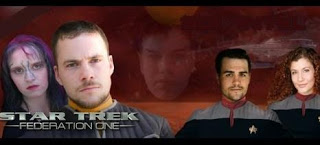
First one is Star Trek: Federation One. It is with a lot of actors you have seen in other Hidden Frontier and Studio Areakt productions and focuses on the chief security of the presidential office of the Federation. While the plot is kind of a mess, the acting was decent and I was actually very sad to see that after the first "season" of two episodes they continued the story in an audio format. Even if the main character looked like he was on speed all the time, I had fun with it.


Another one is Star Trek: The Infinite Chain. Even if it is split into "episodes" it is actually a feature film. The acting is a bit amateurish, but decent. No obese teens in this one. It uses the now tired plot of a Federation starship thrown into unknown space by "an anomaly". The worst part of it was the "doctor" that was assigned to the mission. His character was believable: the guy in charge of the project creating the sensors used to study the anomaly, but in truth not a good manager or having any merit in the team. He just explodes randomly in childish emotional outbursts, threatening everybody with his artificial authority, and everybody hates him. I totally know people like that. However the actor was just goddamn awful and his script lines ridiculous! The makeup was ingenious, but really cheesy.


The last, but certainly not least, is something made by the Hidden Frontier team, but not set in the Star Trek universe. I am talking about Frontier Guard. The casting is made with the better actors of previous productions and, while the universe seems very similar to the Star Trek one, it is actually a different thing altogether. They use another type of space propulsion, it involves a FederationFrontier Guard academy and it concerns The Arc, a huge alien artifact that may have seeded the galaxy with intelligent life. Unfortunately, after some great episodes, they completely lost it. They began (some) episodes with "My name is..." evoking feelings of remembrance towards all the bad DC superhero series and movies, they started pointless subplots like the gay relationship thing - which always pisses me off, not because of the gayness, but because of the relationship that doesn't further the plot in any meaningful way - and threw in the towel after the 12th episode (which was an elevator show, basically).

From these three Frontier Guard was the best. My guess is that they wanted to do a Star Trek Academy series - which makes total sense and it should be the direction of the next Star Trek series - but they didn't get the approval. Since this sounds like a really good idea and one that might attract a lot of fans, I believe studios are keeping the story in reserve. However, not being Star Trek allowed them to evolve both stories and characters and I was really excited to see this done. In a world where everybody is remaking remakes, we need and deserve original content. Just look at David Feintuch's Seafort Saga series of books. That would make a fantastic TV series and has enough material to allow for several companion feature films.

For people just considering starting to watch these, do not expect Star Trek Next Generation. The actors are amateurs, I mean real amateurs not professionals who just started acting, most of them are American Trekkies and - even if I don't want to insult - some of them are just humongous pieces of fat with big glasses, which kind of explains the whole geek high school thing that is kind of difficult to understand in Europe. The stories, the lines, the makeup, the uniforms, the special effects, they are all done by enthusiasts. Sometimes they feel cheesy, sometimes they look completely and horribly fake. But once you realize that they are people like you, enjoying the wonderful universe of Star Trek, you can begin enjoying these productions.

I've watched other things as well, including Machinima style animations like Borg War - which I wouldn't recommend, but wasn't bad, and I will continue to look for these things. Just by looking at people like Hidden Frontier, who start doing something for the fun of it and end up doing original stuff with veteran amateur actors, I get filled with hope for the whole fan made universe, not just the Star Trek one. Keep up the good work guys (and if you can't do it good, keep working and it will get there eventually :) )

The best thing about it is that most of these series are online, on YouTube, free to watch. Here are some links to the shows above and others:
Star Trek Federation One - 1.01 Unity
Star Trek Federation One - 1.02 Institutions

Star Trek: The Infinite Chain

Frontier Guard

Star Trek: Digital Ghost

Special mention: Star Trip - a humorous parody of Star Trek.

Just wanted to post these really funny Star Trek fan made animations.

South Trek - a South Park animated Star Trek:


Star Trekkin' song:


Stone Park - a Flinstones animated Star Trek:


Some other funny stuff:


Today I published a raw version of a program that solves Pixelo puzzles, a Flash version of the game generally known as Nonogram, Picross, Hanjie, etc.. I was absolutely fascinated by the game, not only the concept, but also the attention to details that Tamaii lent to the game. The program is called Pixelo Solver and you can find it at Github, complete with source code.


I liked working on this because it covers several concepts that I found interesting:
  • Responding to global key combinations
  • Getting a snapshot of the screen and finding an object in it
  • Parsing a visual image for digits in a certain format
  • The algorithm for solving the puzzle in a reasonable amount of time and memory (it was not trivial)

Quick how-to: get all the files from here and copy them in a folder, then run PixeloTools.GameSolver.exe and press Ctrl-Shift-P on your puzzle in the browser.

Usage:
  1. Start PixeloTools.GameSolver.exe
  2. Open the browser to the Pixelo game
  3. Start a puzzle
  4. Press Ctrl-Shift-P

However, if the list of numbers per row or column is too long, the automated parsing will not work. In that case, you may use it offline, with a parameter that defines a file in the format:
5 1 10, 3 3 7, 2 5 4, 2 5 2, 2 1 1 1, 1 1 1 1 1, 1 1 3 1 1, 1 1 1 1 1, 1 1 1, 1 1, 1 1, 2 2 2 4, 2 1 1 1 2 4, 2 1 2 1, 7 4, 2 2 1 2 2 2, 2 1 1 1 1 1 1, 2 1 1 4 2, 1 3 4 2 1, 1 1
8 1 1, 5 2 2 1, 2 1 3, 1 1, 1 7 4 1, 3 5 1, 3 1 1 3, 4 3 4, 3 1 1 3, 3 5 1, 1 7 4 1, 1 2, 1 1 1, 2 2 2, 2 1 1 2, 2 1 2 2, 3 2 1, 3 1 1, 4 1 2 2, 9 2 3
where the first line is the horizontal lines and the second line the vertical lines. When the parsing fails, you still get something like this in the output of the program. You can just copy paste the two lines in a file, edit it so that it matches the puzzle, then run:
start "" PixeloTools.GameSolver.exe myFile.txt

The file can also be in XML format, same as in the file the game loads. That's for Tamaii's benefit, mostly.

Let me know what you think in the comments below.

and has 0 comments
As some of you know, I am watching a lot of TV series, including cop and lawyer stuff, childish fantasy and sci-fi series, pirate and musketeer crap, etc. So when I say that I couldn't watch something, you should heed me. There are also some shows that I actually can stand watching, but barely, usually using the fast forward to watch an episode in ten minutes or less.
Here is a list of just such shows:
  • Lost - I think it all started with Lost. After a brilliant pilot episode, it got into 1001 Arabian Nights territory and became ridiculously unwatchable. While it wasn't a truly bad show (some people actually enjoyed all 6 seasons) I couldn't watch it more than 2 seasons. Calm down, the rest of the shows will be more recent.
  • The Messengers - every once in a while the American Bible thumpers convince producers to create religion based TV series or movies. While every possible superstition has and will be used in films, the Christian ones are standalone - in their own cinematic universe, if you will - and take themselves seriously every time. Messengers is one of these, and I couldn't watch more than 2 episodes before I gave up. It's (again) about the upcoming apocalypse and end of days and these 8 idiots are given superpowers to convince God that we are still worth it, while Satan goes around doing silly things. It was not only about the most tabloid part of (a part of) the bible, but it was acted and scripted badly. Ugh!
  • Dig - This relates more to Hebrew religion and feels like a TV series take on the Da Vinci Code, with clones of Jesus (I think), FBI policemen running around in Israel doing whatever they feel like, shady cabals and shady opposing cabals. It could have been interesting and I admit that I was drawn into it by the acting and production values. Unfortunately the script was a convoluted mess that had no way of improving. They never learn to ease into it, present a little bit of the story, add another element later on, make people feel rewarded for continuing to watch the series. Anyway, four or five episodes in, I gave up.
  • iZombie - Oh, you have to love this: young blonde accidentally gets turned into a zombie and gets a job at the morgue in order to have access to a fresh supply of brains. While consuming said brains, she gets visions of what the brain's owner had lived and thus helps a police detective to find out who murdered them. It combines police procedurals with zombies, comedy, romance and drama. Talking of messes, this is as messy as they come. I watched a few episodes before I slapped myself "what the hell are you doing watching this swill?"
  • Eye Candy - A darker show about a girl using her hacker tech skills to try and catch the serial abductor and killer of young women, including her sister. Yet the killer is just as able and a game of cat and mouse ensues. It started well, then went into pop culture territory. Besides, she continues on only because the killer refuses to murder her and get on with his job. Something about the way the film was made or the main actress or the ridiculous plot made it impossible for me to get past the second episode.
  • Allegiance - It is strange to put this series here, as I watched all the episodes so far. However, it was hope that kept me going, not the quality of the show. While it is about Russian spies in the US, living as a family, while their unknowing son is recruited into the FBI, while the antagonists are interesting, the story goes so much over the top that it becomes overcheesy. That means it starts as cheesy, then it starts to smell. Just do yourself a favor and do not watch it.
  • Suits - Yet another flashy show that I kept watching for no good reason. It is about lawyers. Young, cocky, caught in personal intrigues and competing with one archnemesis after another, while occasionally engaging in some silly romance. It makes no sense, although I have to admit that I liked the feel of the show. It just goes nowhere. They get the mood right, the actors, the characters, then they make a joke of the storyline and script.
  • Helix - Helix is the new Lost! It starts with a subject close to my heart: killer viruses, and then it crashes into la-la-land. Viruses that make people immortal and strong so they form a world controlling organization, CDC teams that act like they are terrorist splinter cells with no support, no rules, no communication, strains of the virus that turns people into The Strain like vampires, religious cults that are also genetic scientists living on their own island, etc. It starts as something, goes into something else, switches back. It's like someone was undecided what to write about and they wrote about everything then they just drew lines between the unrelated subjects and wrote a script. It is a complete and utter waster of time.
  • Elementary - I watched two seasons of this until I admitted to myself that there is no point in continuing. I like both Johnny Lee Miller and Lucy Liu, I love Arthur Conan Doyle's Sherlock Holmes character and so a modern Sherlock should have been something I would at least enjoy. Unfortunately, it shortly turns into another "gifted person helps the New York police" show and one can feel when the writers just completely stopped giving a damn, if they ever did before beyond pushing the pilot.
  • Scorpion - Talking about gifted persons helping the police, this had a promising concept: a genius young man creates a sort of a thinktank of gifted people then starts helping his FBI parent surrogate. While the characters were brilliant, the people writing their script obviously were not. It took a few episodes to completely fail and another ten for me to just give up hope.
  • The Librarians - God, what a complete and utter mess. A TV show spinoff of the ridiculous Librarian movies, it was completely stupid. I mean, the movies were masterpieces compared to the writing for this show. Stay away!
  • The Newsroom - This is a show that has ended and I watched all of its episodes. However, it was under duress. My wife liked it, but then I could see that she couldn't watch it anymore. I watched the last mini-season just in order to tell her it was not worth watching. It's about a news organisation that fights for its moral integrity. It would have been fun if not for the hyperactive writers that thought people could normally carry conversations like machineguns shoot bullets and the ridiculous romantic interludes that made no sense for anyone but a New Yorker raised on Woody Allen movies.
  • State of Affairs - I already ranted enough about this piece of propagandistic crap. The plot was stupid, the script was stupid, the actors couldn't give a damn. It's just bad!
  • The 100 - In theory I am still watching this young adult sci-fi TV show. In reality, I can't make myself start watching the second season. Why? Because the sci, as usual, gets completely negated by the fi. Add to this hormone induced behaviour of teenage kids and savage barbarians and you get a load of messy crap. It started really well, though. Too bad.
  • Extant - Another sci-fi show in which they dumped randomly whatever was hot at the moment: aliens, artificial intelligence, the Japanese guy from Helix, etc. Add to this the excruciating acting skills of Halle Berry and you get something unwatchable.
  • Stalker - This is one of the more interesting police procedurals. It involves a team that is tasked to handle stalkers. The new hire of the agency may be a stalker himself. The lead actors are people that I respect. However the story was so banal and lacking anything that showed any concern for the lives of the characters or victims, it was so formulaic that it ended up being something I regret having watched.
  • Arrow - OK, I am still watching The Arrow, but I do it on fast forward. It started as a fun comic book TV show with a vigilante dressed in green killing assholes with the use of arrows. It then started growing and expanding until it reached a full team of heroes, with impossible situations, history, skill learning curves, ridiculous villains. It culminated with John Barrowman having a line in the show in which he tells three other characters he is the better man for a job because he is the better at acting. Which is true, but it just shows that even the scriptwriters are tired of the mediocre talents in this mediocre show. I keep watching it because it is set in the same universe as The Flash, which is the better TV show, even if not by much.
  • Gracepoint - When Americans are redoing a show with the same script as the original show from a different country I snicker. Stoopeed Americaens, they can't read subtitles. But Gracepoint upped the ante: they redid Broadchurch, a British TV show. Not only that, they cast the same actor as the main character. I love David Tennant, but I can't possibly condone watching this. Anyway, it was cancelled after a season, and then Broadchurh continued for a second season, also starring Tennant.
  • Sleepy Hollow - An entire TV series based on the Legend of the Sleepy Hollow. Starring a colonial Mason that fought for and knew the forefathers of the United States, resurrected in our times and fighting along a black female police officer to stop the End of Times. What can possibly go wrong here? Yet it wasn't that clear cut. The comedy was fun, the original drama had impact, the romance was believable and John Noble, like in Fringe, was awesome. However the storyline, like in Fringe, descended into a chaotic mess that makes no sense and no one could ever care for. Too bad, since it wasn't a complete waste of time, especially at the beginning.
  • Madam Secretary - Just as with State of Affairs, I've ranted enough about it. It's a pure propaganda piece, with no artistic value whatsoever.
  • Haven - It started as a nice supernatural police procedural with a sexy FBI agent coming in a town where people get dangerous "troubles" which act like superpowers out of control. I kept waiting for it to get anywhere, instead it just went more and more overdramatic and adding storylines that made no sense and in the end turned into a supernatural 90120. Too bad, since it started well and has some actors that I really like.
  • Forever - Forever boring, this show is about a British doctor who never ages and, whenever gets killed, he finds himself alive and well in a nearby body of water, completely naked. And what does he do with that? He helps the police, as a forensic medic. Just as a general rule: avoid the gifted people helping the police catch bad guys shows. They never end well and they are as well propaganda pieces.
  • The Lottery - Badly made show. Bad casting, bad acting, bad scripting. The plot: people stop having children, embryos stop getting fertilized and a woman doctor finds a way. Obviously, the powers that be want to control this in a market of dwindling supplies. Could have been nice, probably, although shows about children and parently feelings never do well in the long run, but it was pure shit from the beginning.
  • Taxy Brooklyn - Someone tried to combine the French Taxi storyline with a police procedural. Sexy ass police detective, a Black French taxi driver, some intrigue and of course the obligatory connection with an old case involving a relative. But it was bad. The actors did what they could with lazy writing, but they couldn't save it.
  • The Witches of East End - Some of the most beautiful women in acting get together with ridiculously good looking men in order to act a really stupid Dynasty-like plot. Just like similarly afflicted The Originals, it is a complete waste of time, unless you are a hormonal teenager and you need something to jack off to.
  • The Leftovers - Trying to express the horrible anguish of being among the ones left on Earth after 2% of the population randomly disappears. Of course, it hints of another Bible concept: the Rapture. It felt to me overly dramatic, with people just doing stuff for no good reason and overly depressing as well for equally no good reason. It seemed to be well acted, but I just couldn't watch it.
  • Resurrection - an American remake after Les Revenants, it missed the point completely. Ended up being this drawn out mystery that led nowhere, with really unsympathetic characters and without any of the real tension from the French series.
  • Da Vinci's Demons - I know, I am still watching it, but not because it is worth watching. It is about a young Da Vinci who does everything from saving Florence to saving Italy and then going to the Americas (way before it was discovered) to look for clues about his mother, who was there previously. It is a fun to watch show, but it really goes nowhere. I liked the acting and the production values, though.
  • Crisis - An intriguing concept: some very resourceful people kidnap a lot of high profile adolescent kids, including the son of the president of the United States, then they use the parents to achieve their goals. While the show was well done, the story was just a lazy fantasy trying to surf the edge of suspension of disbelief. Again, it goes nowhere.
  • The Tomorrow People - An American take of an old British children's TV show that wasn't good to begin with, it only served to promote certain actors to better TV shows. It used the common tropes: child with mysterious father who dies doing something awesome, mother unknowing, uncle being involved somehow, evil organizations, rebellious teenagers fighting them, etc. It just collapses under the ridiculous ideas that they introduce to appease a boring viewership.
  • The Originals - Some spin-off from a vampire show that I never watched, it is about pompous asses acting even more pompous because they are the original vampires. Werewolves and witches are thrown in the mix, but the only worth mentioning attribute of the show is the pompousness. Which is annoying. So don't watch it.
  • Killer Women - Trying to get on the diversity bandwagon and get some easy money, it was supposed to be a police procedural with tough women. Didn't pan out. Was cancelled.
  • Bitten - One of the most beautiful actresses around is a werewolf. Instead of being about her biting more than she can chew (heh heh), it is about another clan/royalty obnoxiousness, while the world is blissfully unaware and rivals are trying to take power or kill them or whatever. Do you know why people don't officially acknowledge vampires and werewolves? Because they act all annoying and overbearing while being completely idiotic. Nobody wants to know these people!

OK, as an interesting experiment on my preferences vs the public preferences, I will tell you how many of the shows above were cancelled and how many were not. Ready?

Completed (meaning not cancelled, but finishing their story): 2
Cancelled: 16
Still Running or undecided: 15

So there you go, studios think 50% of the shows that I can't stand should be running and they are basing their decisions on public choice. What do you guys think?